Tesla launches Cybercab robotaxi. The cars have no steering wheel
What's the story
Tesla has officially launched its Cybercab robotaxi service in Austin, Texas. This marks the first public deployment of the two-seat, fully autonomous vehicle. The initial rides have been well-received by users, who praised the advanced Full Self-Driving (FSD) system's smooth performance. However, this initial rollout is limited to a geofenced area in Austin and not the broad multi-city availability promised by CEO Elon Musk earlier.
Vehicle specifications
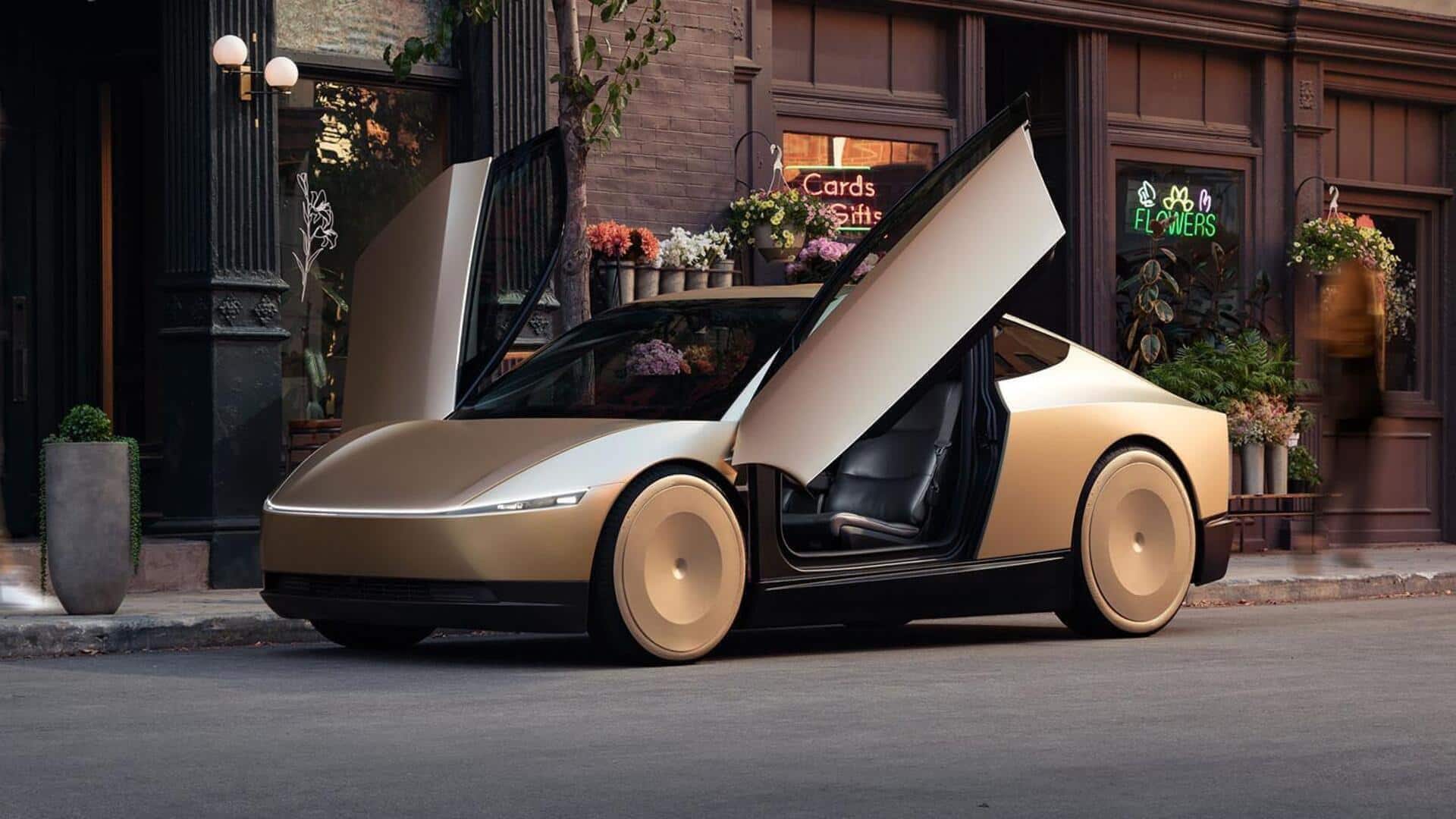
Cybercab has butterfly doors, no steering wheel, and no pedals
The Cybercab comes with a host of safety features, including nine cameras and smart airbag control.
It also offers rider comforts like ample legroom, a spacious trunk, and individual climate control. All these are powered by an Unreal Engine interface.
The Cybercab has butterfly doors, no steering wheel, and no pedals. It packs a 35kWh battery with about 322km of range and support for inductive charging.
The much-anticipated price tag of "under $30K" still remains unconfirmed by Tesla.
Service area
First public rides in Austin
Tesla has started offering public rides in Austin for its Cybercab. This is the first time the two-seat, fully autonomous robotaxi has carried paying customers instead of employees or invited testers.
The service area for this rollout is the same as that of Tesla's Model Y robotaxi fleet. However, currently only 45 Cybercabs are authorized for commercial use in Texas.
Technology upgrade
Cybercab's FSD is an upgraded version
The FSD used in Cybercab is a more advanced version than that offered in Tesla's Model 3, Model Y, and Cybertruck.
The vehicle also comes with extensive safety and monitoring systems for a driverless car.
Nine cameras cover the exterior and cabin, while a radar sensor built into the ceiling can detect whether a seat is empty, holds a child seat, or holds an adult.
Design details
Cabin offers more legroom than Model Y
The Cybercab's cabin offers 43.4-inch of legroom, slightly more than the maximum legroom offered in the Model Y at 41.8-inch.
The rear trunk can hold up to 100kg, enough for two checked bags and two carry-ons or one large folded stroller or small folded wheelchair.
Tesla has also shared engineering specifics on two of Cybercab's core systems - a redesigned internal winding with a simpler cooling and lubrication setup for the motor that drives the wheels.